

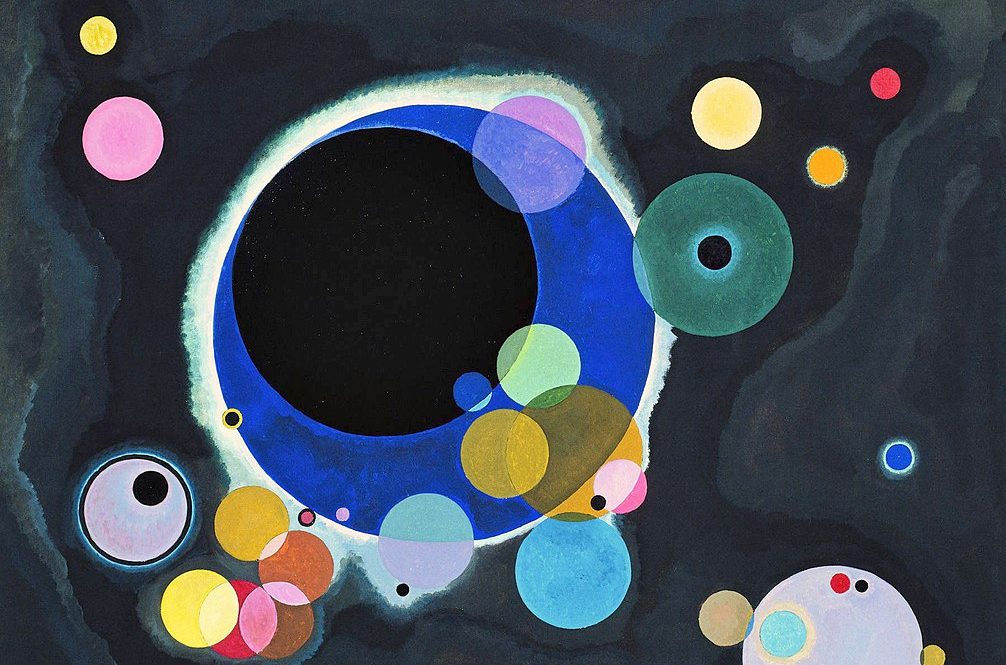
Kandinsky Art: How Colour and Shape Transformed Modern Painting
Wassily Kandinsky: The Art of Seeing Music
Wassily Kandinsky helped transform modern art by asking a radical question: could colour and shape communicate as powerfully as words, objects or music? His paintings invite viewers to experience art not simply as a picture of the world, but as an arrangement of feeling, rhythm and energy.
From representation to abstraction
Born in Moscow in 1866, Kandinsky initially trained and worked in law and economics before turning to art. He later studied in Munich, where he became part of a lively community of artists seeking new ways to express modern life. Over time, he moved away from painting recognisable subjects and towards increasingly abstract compositions.
Kandinsky is often associated with the development of abstract art in Europe. Rather than treating a painting as a window onto a landscape or scene, he used colour, line and form as independent elements. Circles, triangles, arcs and sweeping strokes could carry meaning without depicting a specific object.
Colour, sound and emotion
Music was central to Kandinsky’s thinking. He believed that colours and forms could affect the viewer in a way comparable to musical notes and harmonies. A sharp line might feel energetic; a rounded shape could seem calm or expansive. Bright colours could clash, balance or build towards a visual crescendo.
This connection is especially clear in his compositions, whose titles often suggest musical structure. Works such as Composition VII (1913) bring together swirling lines, vivid colour and overlapping forms in a dense, dramatic whole. The painting does not tell a simple story. Instead, it creates an experience that unfolds across the canvas, much like a piece of music.
A changing visual language
Kandinsky’s style developed throughout his career. His early paintings still drew on landscapes, folk art and recognisable imagery, while later works became more abstract and carefully organised. During his time at the Bauhaus, the influential German school of art and design, geometric shapes and clear structural relationships became increasingly prominent in his work.
Even in his most abstract paintings, Kandinsky did not abandon emotion. His shapes and colours feel as though they are in motion: colliding, floating, gathering or dispersing. The result can seem spontaneous, yet the compositions are carefully considered. Every mark contributes to the balance and tension of the whole.
Why Kandinsky still matters
Kandinsky’s art changed expectations about what a painting could do. It did not have to imitate nature or tell a literal story to be meaningful. It could communicate through sensation, invite personal interpretation and make colour itself the subject.
That idea continues to influence artists, designers and musicians. Kandinsky’s work also offers viewers a useful reminder: there is no single correct way to respond to abstract art. Looking closely at the colours, shapes and rhythms can be as rewarding as trying to identify what a painting represents.
More than a century after his most influential works were made, Kandinsky’s paintings remain compelling because they ask us to look—and listen—with our eyes.
9 Tips for Exploring Kandinsky’s Art
- Look for bold geometric shapes in Kandinsky’s paintings.
- Notice how he uses colour to suggest emotion.
- Compare his abstract works with his earlier landscapes.
- Listen to music while viewing his art to explore its rhythms.
- Spot circles, triangles and lines within the composition.
- See how colours and shapes balance across the canvas.
- Explore how Kandinsky linked painting with music.
- Read the painting’s title for clues to its mood.
- Take time to notice how each colour makes you feel.
Look for bold geometric shapes in Kandinsky’s paintings.
Look for bold geometric shapes in Kandinsky’s paintings, such as circles, triangles and sweeping lines. Notice how he balances and contrasts these forms across the canvas: a sharp angle might bring energy, while a large circle can create a sense of calm or movement. Rather than searching for a recognisable subject, follow the shapes and see how their colours and positions guide your eye.
Notice how he uses colour to suggest emotion.
Notice how Kandinsky uses colour to suggest emotion. Bright reds and yellows can create a sense of energy or urgency, while blues may feel calm, reflective or mysterious. Rather than describing a particular object, his colours work together like notes in a piece of music, shaping the mood and guiding your response to the painting.
Compare his abstract works with his earlier landscapes.
Compare Kandinsky’s abstract works with his earlier landscapes to see how his style evolved. Look for the way recognisable scenery gradually gives way to expressive colours, shapes and lines, and notice how elements of landscape remain in the rhythm and movement of his later paintings. This comparison reveals how he moved beyond depicting the world towards using art to express emotion and sound.
Listen to music while viewing his art to explore its rhythms.
Listen to music while viewing Kandinsky’s art and notice how its rhythms shape the way you see the painting. Let the colours, lines and forms move with the sounds: a quick beat might make a composition feel energetic, while a slower melody could bring out its calmer, more spacious qualities. There’s no single correct match, so choose music that speaks to you and see what new details emerge.
Spot circles, triangles and lines within the composition.
Look closely at the composition and pick out its basic shapes: circles, triangles and lines. Notice how they move across the canvas, overlap or sit in contrast with one another. Kandinsky used these simple forms to create rhythm, balance and tension, so following their paths can help you appreciate how the painting is organised and how it makes you feel.
See how colours and shapes balance across the canvas.
When looking at Kandinsky’s art, notice how colours and shapes balance across the canvas. Bold tones may be offset by quieter areas, while circles, lines and angles guide the eye from one part of the painting to another. Take a moment to see how these contrasts create rhythm and harmony, even when the composition feels energetic or abstract.
Explore how Kandinsky linked painting with music.
Kandinsky believed that painting could affect the senses much like music, with colours and shapes creating rhythms, harmonies and emotional responses. As you explore his work, look for the way bold colours, sweeping lines and geometric forms seem to move across the canvas, almost like notes in a composition. Rather than searching for a literal subject, notice how the visual elements make you feel and whether they suggest a particular tempo, mood or sound.
Read the painting’s title for clues to its mood.
Read the painting’s title for clues to its mood. Kandinsky often chose evocative titles such as Improvisation and Composition, which can suggest whether a work feels spontaneous, carefully arranged or musical in spirit. The title is not a definitive guide, but it can offer a useful starting point as you explore the painting’s colours, shapes and rhythms.
Take time to notice how each colour makes you feel.
Take a moment to notice how each colour makes you feel. Kandinsky believed that colour could speak directly to our emotions, much like music, so pay attention to the mood, energy or memories that different shades bring to mind. There’s no right or wrong response: simply let your feelings guide the way you experience the painting.