

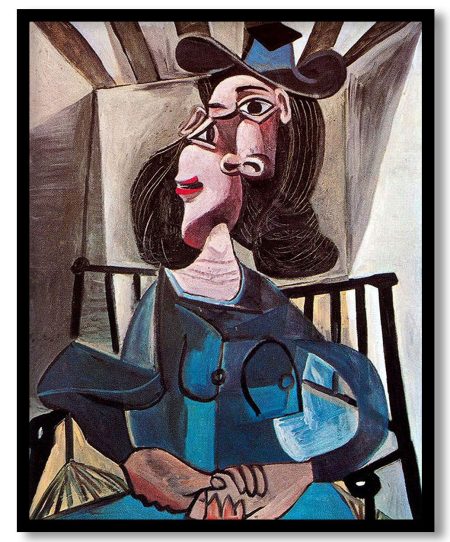
Pioneering Picasso: Exploring the Artistic Legacy of a Creative Genius
The Genius of Picasso’s Art
Pablo Picasso, the legendary Spanish artist, is widely regarded as one of the most influential figures in 20th-century art. His revolutionary approach to form and style redefined the artistic landscape and continues to inspire generations of artists.
One of Picasso’s most famous periods is his Cubist phase, where he fractured and reassembled objects in a geometrically abstract way. This innovative technique challenged traditional notions of representation and perspective, paving the way for modern art movements.
Throughout his career, Picasso explored a diverse range of styles and themes, from Blue Period melancholy to Rose Period romance, and later to his bold experiments with Surrealism. His prolific output encompassed painting, sculpture, ceramics, and more.
Perhaps one of his most iconic works is “Guernica,” a powerful anti-war painting that captures the horrors of the Spanish Civil War. The stark monochromatic palette and distorted figures convey a sense of anguish and despair that resonates with viewers to this day.
Picasso’s legacy extends far beyond his artistic achievements; he was a cultural icon whose life and work continue to fascinate scholars and enthusiasts alike. His ability to constantly reinvent himself while staying true to his creative vision is a testament to his enduring genius.
As we look back on Picasso’s unparalleled contributions to the art world, we are reminded of his words: “Everything you can imagine is real.” Indeed, Picasso’s art remains a testament to the boundless possibilities of human creativity.
Exploring Picasso: Answers to 8 Common Questions About His Art and Legacy
- 1. Who was Pablo Picasso?
- 2. What art movements was Picasso associated with?
- 3. What are some famous paintings by Picasso?
- 4. How did Picasso influence modern art?
- 5. What is Cubism, and how did Picasso contribute to it?
- 6. Where can I see Picasso’s artwork in museums?
- 7. What themes did Picasso explore in his art?
- 8. How many artworks did Picasso create during his lifetime?
1. Who was Pablo Picasso?
Pablo Picasso, born in Spain in 1881, was a revolutionary artist who reshaped the course of modern art. Widely considered one of the most influential artists of the 20th century, Picasso was a master of various artistic styles, from Cubism to Surrealism. His innovative approach to form and style challenged traditional conventions and paved the way for new artistic movements. Throughout his prolific career, Picasso created a vast body of work that continues to captivate and inspire audiences worldwide. His legacy as a visionary artist remains unparalleled, cementing his place in art history as a true creative genius.
2. What art movements was Picasso associated with?
Pablo Picasso, the renowned Spanish artist, was associated with several significant art movements that shaped the course of modern art history. One of the most notable movements linked to Picasso is Cubism, which he co-founded with Georges Braque. Cubism revolutionised artistic representation by breaking down forms into geometric shapes and challenging traditional perspectives. Additionally, Picasso was also affiliated with Surrealism, a movement that explored the subconscious mind and dream imagery. His involvement in these avant-garde movements highlights his versatility and profound impact on the evolution of artistic expression in the 20th century.
3. What are some famous paintings by Picasso?
Pablo Picasso, a prolific artist known for his groundbreaking contributions to modern art, has created numerous iconic paintings that have left a lasting impact on the art world. Some of his most famous works include “Les Demoiselles d’Avignon,” a seminal piece in the development of Cubism; “Guernica,” a powerful anti-war masterpiece depicting the horrors of conflict; “The Weeping Woman,” a poignant portrayal of grief and anguish; and “The Old Guitarist,” a haunting representation of human suffering. These paintings showcase Picasso’s extraordinary talent for capturing emotion and pushing the boundaries of artistic expression.
4. How did Picasso influence modern art?
Pablo Picasso’s influence on modern art is profound and far-reaching. Through his innovative techniques and groundbreaking approaches to form and style, Picasso redefined the very essence of artistic expression. His pioneering work in Cubism, where he shattered traditional perspectives and reconstructed reality in a geometrically abstract manner, laid the foundation for numerous modern art movements. Picasso’s ability to push boundaries, challenge conventions, and constantly reinvent himself inspired generations of artists to explore new creative horizons and embrace experimentation. His legacy as a trailblazer in the art world continues to shape contemporary artistic practices and perspectives on what art can be.
5. What is Cubism, and how did Picasso contribute to it?
Cubism is an avant-garde art movement that emerged in the early 20th century, characterized by the depiction of subjects from multiple viewpoints to create fragmented and abstracted forms. Pablo Picasso played a pivotal role in the development of Cubism, particularly alongside Georges Braque. Together, they pioneered this revolutionary style by breaking down objects into geometric shapes and reassembling them in a new visual language. Picasso’s bold experimentation with form, perspective, and colour challenged conventional artistic norms and laid the foundation for modern art. His innovative contributions to Cubism not only transformed the way we perceive art but also influenced generations of artists to think beyond traditional boundaries.
6. Where can I see Picasso’s artwork in museums?
For art enthusiasts eager to experience Picasso’s masterpieces in person, a visit to renowned museums around the world is a must. Some of the most prominent institutions showcasing Picasso’s artwork include the Museo Picasso in Barcelona, Spain, which houses an extensive collection spanning the artist’s career. The Musée National Picasso-Paris in France is another notable destination, offering a comprehensive display of Picasso’s works. Additionally, the Museum of Modern Art (MoMA) in New York City and the Tate Modern in London feature significant pieces by Picasso in their collections, providing visitors with a unique opportunity to immerse themselves in the genius of this iconic artist.
7. What themes did Picasso explore in his art?
Pablo Picasso’s art delved into a wide array of themes that reflected his ever-evolving creative vision. Throughout his career, Picasso explored themes such as love and relationships, human suffering and war, identity and self-reflection, as well as mythology and folklore. His Blue Period depicted melancholy and poverty, while his Rose Period focused on romance and beauty. Picasso also delved into Cubism, Surrealism, and abstraction, pushing the boundaries of artistic expression. His diverse exploration of themes showcased his versatility as an artist and his ability to capture the complexities of the human experience through innovative visual language.
8. How many artworks did Picasso create during his lifetime?
Pablo Picasso, the prolific Spanish artist, created an astonishing number of artworks during his lifetime. It is estimated that Picasso produced over 50,000 artworks, including paintings, sculptures, ceramics, prints, and drawings. This immense body of work reflects Picasso’s tireless creativity and his constant exploration of new artistic styles and techniques. Each piece in Picasso’s vast oeuvre offers a unique insight into the mind of a master artist who revolutionised the art world and left an indelible mark on art history.