

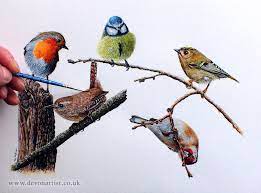
Bird Painting: Capturing the Beauty and Character of Birds
Bird Painting: Capturing the Beauty and Character of Birds
Birds have inspired artists for centuries. Their vivid colours, graceful movement and remarkable variety make them compelling subjects for painting, whether portrayed in a natural landscape or observed in close-up. A successful bird painting does more than record a species’ appearance: it can suggest a fleeting moment, reveal the animal’s character and draw attention to its place in the natural world.
A long tradition of painting birds
Birds appear in art across many cultures and periods. They have featured in decorative patterns, religious imagery, still lifes and scientific illustrations. In Europe, detailed bird studies became especially important as naturalists sought to document and classify species. Artists developed precise ways to show plumage, anatomy and posture, often working from specimens as well as live birds.
Bird painting has since expanded beyond strict documentation. Artists may still aim for scientific accuracy, but they also use birds to explore colour, movement, atmosphere and symbolism. A small bird on a bare branch can suggest quietness or resilience; a flock in flight can convey energy, freedom or change.
Learning to observe
Careful observation is at the heart of painting birds. Their bodies may look simple at first, but small differences in proportion and posture can be essential to a convincing image. The shape of the head, the length of the legs, the angle of the tail and the position of the wings all help distinguish one species from another.
Watching birds in life can also reveal the qualities that photographs often miss. A bird may turn its head, fluff its feathers, pause to listen or shift its weight before taking flight. Quick sketches and written notes can help capture these changes. Even a short period of observation may provide useful reference for a more finished painting.
Choosing materials and techniques
Birds can be painted in a wide range of media, including watercolour, oil, acrylic, gouache and coloured pencil. Each offers different possibilities.
- Watercolour is well suited to translucent washes, soft backgrounds and delicate feather details.
- Oil paint allows colours to be blended gradually and can create rich, layered textures.
- Acrylic dries quickly and works well for bold colours, clear shapes and energetic brushwork.
- Gouache provides opaque, matte colour and is useful for combining crisp details with broad areas of tone.
Rather than painting every feather, it can be more effective to group them into larger patterns of light and dark. Begin with the bird’s overall shape, then establish its main colours and shadows. Smaller marks can be added later to suggest the texture of the plumage without overwhelming the image.
Colour, light and setting
Colour is one of the pleasures of bird painting, but accuracy does not depend on copying each hue literally. Feathers reflect light and change in appearance according to their surroundings. A black feather may contain blue, green or violet tones, while a white bird may show subtle grey, cream or warm reflections.
The background plays an important role, too. A simple wash can make the subject stand out, while a more detailed setting can place the bird within its habitat. Branches, grasses, water and sky need not be rendered with the same precision as the bird. Keeping some areas loose can create contrast and give the composition a sense of space.
Composition and movement
The position of a bird within the picture affects how the scene feels. A bird facing towards the edge of the canvas may seem ready to leave, while one looking into the image can lead the viewer’s eye through the composition. The direction of a beak, wing or branch can create a visual path across the painting.
Movement can be suggested through the angle of the body, the spread of the wings or the rhythm of repeated shapes in a flock. A perched bird offers an opportunity to study balance and posture; a bird in flight asks the artist to simplify the form and focus on its overall gesture.
Meaning and personal expression
Birds often carry symbolic associations, though these vary between cultures and individuals. An owl may be connected with wisdom, a dove with peace, or a migratory bird with travel and return. Such meanings can add another layer to a painting, but they are not essential. A bird painted simply because of its colour, song or presence can be just as expressive.
Artists also bring their own experiences to the subject. A familiar garden visitor might evoke a particular place or season, while a rare species could draw attention to conservation and the pressures facing wildlife. In this way, bird painting can combine close observation with personal reflection.
Getting started
For beginners, it helps to choose a bird with a clear, recognisable shape and work from reliable reference images or direct observation. Start with a few simple sketches, paying attention to proportion and posture before adding detail. A limited palette can make it easier to understand how colours relate to one another.
Most of all, allow time to look. The more closely a bird is observed, the more its individuality begins to emerge. Whether painted with fine detail or broad, expressive brushstrokes, a bird painting can celebrate both the beauty of its subject and the artist’s way of seeing it.
Bird Painting: Five Frequently Asked Questions
- What materials do I need to start painting birds?
- How do I paint realistic feathers?
- Which colours should I use to paint a bird?
- How can I paint a bird in flight?
- How do I choose a good reference photo for a bird painting?
What materials do I need to start painting birds?
To start painting birds, you’ll need a few basic materials: paper or a canvas suited to your chosen medium, paints such as watercolour, acrylic or gouache, a small selection of brushes, a palette for mixing colours and clean water if you’re using water-based paints. A sketchbook and pencil are useful for practising bird shapes and noting details, while a reference photo or observation of birds can guide your work. Begin with simple, affordable supplies and add more as you discover which materials and techniques you enjoy.
How do I paint realistic feathers?
To paint realistic feathers, start by observing their overall pattern, direction and shape rather than drawing every feather individually. Build up the plumage in layers, working from larger feather groups to smaller details, and follow the way each feather overlaps and curves around the bird’s body. Use subtle shifts in colour and tone to suggest texture, with highlights and shadows placed according to the light source. Fine, controlled brushstrokes can add detail, but vary their length and softness so the feathers look natural rather than uniform.
Which colours should I use to paint a bird?
The colours you use depend on the bird’s species, the lighting and the effect you want to create. If you’re aiming for a realistic painting, use a photograph or careful observation as a guide, and look beyond the obvious colours: feathers that appear black may contain blue or violet tones, while white plumage often includes subtle greys and warm shades. Start with a small palette of the bird’s main colours, then add lighter highlights and darker shadows to give its feathers depth and form.
How can I paint a bird in flight?
To paint a bird in flight, begin with its overall silhouette and direction of movement rather than individual feathers. Study a clear reference image, noting the angle of the body, the shape and position of the wings, and how the tail balances the bird. Sketch these simple forms lightly, then block in the main areas of colour and shadow before adding a few feather details. Loose, confident brushstrokes can help suggest motion, while a softer or less detailed background keeps attention on the bird.
How do I choose a good reference photo for a bird painting?
Choose a reference photo that is clear, well lit and shows the bird in a pose that interests you. Look for visible details around the beak, eyes, legs and feathers, and check that the bird’s proportions are not distorted by the camera angle. A photograph with strong light and shadow can help you understand the form, while a simple background makes the subject easier to study. Use images you have permission to paint from, or take your own; if you use several references, make sure the lighting and perspective remain consistent.