

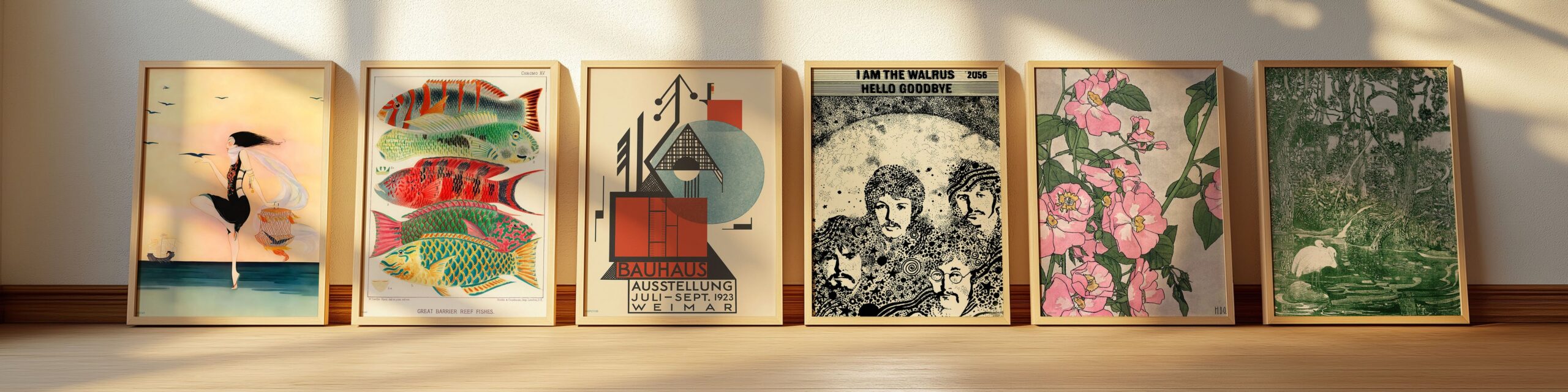
Small Art Prints, Big Impact: How to Choose and Display Them
Small Art Prints, Big Impact
Art does not have to fill a wall to make a statement. Small art prints bring colour, character and a personal touch to a room, whether they’re displayed alone on a bedside table or arranged as part of a carefully curated gallery wall. Their modest size makes them easy to live with, move around and collect — without asking you to rethink your entire space.
Why choose a small art print?
One of the joys of small prints is their versatility. A compact piece can brighten an overlooked corner, add interest to a shelf or bring balance to a larger display. It can also be a lovely way to introduce art into a rented home, a workspace or any room where wall space is limited.
Smaller works are often an accessible way to start collecting. You can choose a piece because it reminds you of a place, reflects your taste or simply makes you smile. Over time, a handful of prints can build into a collection that feels personal rather than overly formal.
Finding the right print
Start with the feeling you want the artwork to bring to the room. A bold abstract print can add energy to a quiet space, while a landscape or botanical illustration may create a calmer mood. Photography, line drawings, typography and archival reproductions each offer a different look, so consider what you’re naturally drawn to rather than following trends alone.
Colour is another useful guide. A print can echo shades already in the room for a harmonious effect, or introduce a contrasting colour to draw the eye. If you’re choosing several pieces, look for a shared detail — perhaps a similar palette, subject or style — to help them sit comfortably together.
How to display small art prints
A small print can look lost on a large, empty wall, but thoughtful placement helps it feel intentional. Try hanging it above a narrow table, beside a mirror or within a group of other artworks. On shelves, lean a framed print against the wall and layer it with books, ceramics or a small plant for a relaxed arrangement.
For a gallery wall, mix small prints with larger pieces and leave enough space between frames to let each one breathe. Laying everything out on the floor first can help you find a composition you like before making any holes in the wall. Matching frames create a neat, unified look; a mix of frame styles feels more informal and collected.
Choosing frames and paper
The frame can change the character of a print. A slim black frame often gives artwork a crisp, contemporary finish, while natural wood can feel warmer and more casual. A mount — the border between the print and the frame — can give a small image more presence and help protect it from touching the glass.
If you’re buying a print, check its dimensions and whether it comes framed. Paper finish also matters: matte paper tends to have a soft, understated appearance, while a smoother finish may make colours seem more vivid. For valuable or sentimental pieces, keep them away from prolonged direct sunlight and damp conditions.
A small way to make a space your own
Small art prints prove that a room’s character is often found in the details. They can mark a memory, celebrate an artist you admire or simply add a little beauty to an everyday routine. Start with one piece you love, give it a considered place, and let your collection grow at its own pace.
7 Essential Tips for Displaying Small Art Prints in Your Home
- Choose a print size that suits the wall space.
- Use a mount to give the artwork breathing room.
- Group small prints for a balanced gallery wall.
- Pick frames that complement the artwork.
- Keep prints away from direct sunlight.
- Hang prints at eye level.
- Use acid-free backing to help protect the print.
Choose a print size that suits the wall space.
Choose a print size that suits the wall space so the artwork feels balanced rather than lost or overwhelming. A small print can look lovely on a narrow wall, shelf or bedside table, while a larger area may benefit from a bigger piece or a group of prints. Before buying, measure the space and consider how the print will sit alongside nearby furniture and other decorations.
Use a mount to give the artwork breathing room.
A mount gives a small art print a little breathing room, creating a calm border between the artwork and its frame. This extra space can make the image feel more prominent without overwhelming it, while helping the print sit neatly in the room. Choose a mount colour that complements the artwork — a soft white or warm neutral is a versatile place to start.
Group small prints for a balanced gallery wall.
Group small art prints to create a gallery wall that feels balanced and considered. Arrange them around a shared feature, such as a similar colour palette, subject or frame style, and mix different sizes to add interest. Before hanging anything, lay the prints out on the floor to test the composition, keeping spacing fairly even so each piece has room to stand out.
Pick frames that complement the artwork.
Choose a frame that complements the artwork rather than competing with it. A simple frame can let a bold or detailed print take centre stage, while a warmer wood finish may bring out earthy colours and textures. Consider the room’s existing style, too, and use a mount if you’d like to give a small print more presence.
Keep prints away from direct sunlight.
Keep small art prints away from direct sunlight to help preserve their colours and paper. Over time, UV rays can cause fading, discolouration and brittleness, particularly in delicate or unprotected prints. Choose a shaded wall or display them away from bright windows; UV-filtering glass can offer extra protection.
Hang prints at eye level.
Hang small art prints at eye level so they’re easy to appreciate and feel naturally connected to the room. As a general guide, place the centre of the print around 145–155 cm from the floor, adjusting for your height and the space. If you’re hanging it above furniture, leave a little breathing room between the frame and the surface below.
Use acid-free backing to help protect the print.
When framing a small art print, choose acid-free backing to help protect it over time. Ordinary backing materials can release acids that may cause paper to discolour or become brittle, while acid-free options help reduce this risk. It’s a simple detail that can make a real difference, especially for prints you’d like to keep and enjoy for years to come.