

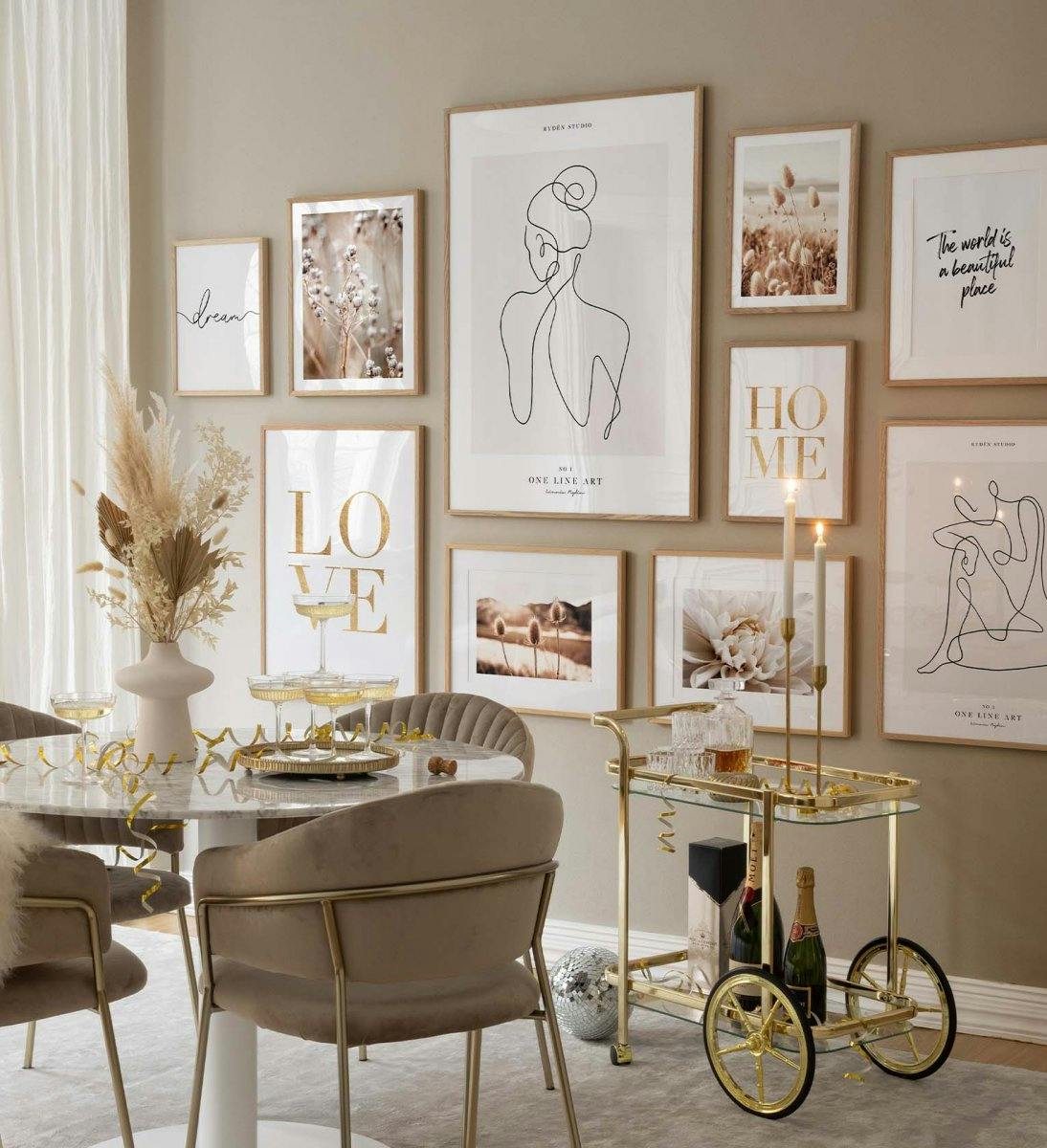
Line Art Prints: Simple Lines, Lasting Impact
Line Art Prints: Simple Lines, Lasting Impact
Line art prints show how much can be expressed with very little. Using outlines, curves and marks rather than blocks of colour or elaborate shading, they bring a sense of clarity and movement to a space. A single continuous line might suggest a face, a flower or a figure; a few carefully placed strokes can turn an otherwise blank wall into a focal point.
From minimal interiors to more eclectic rooms, line art is an adaptable choice. Its appeal lies in the balance between simplicity and expression: the image feels pared back, yet leaves room for the viewer to imagine what lies beyond the line.
What is line art?
Line art is an image made primarily from lines. These may be delicate or bold, precise or loose, and can vary in weight to create contrast and movement. Some works use a single unbroken line, while others combine many marks to build a more detailed image.
Although line drawing has a long history in illustration, printmaking and fine art, contemporary line art spans a wide range of subjects. Common motifs include portraits, abstract shapes, plants, architecture and everyday objects. The style can feel playful, elegant, graphic or contemplative, depending on the artist’s approach.
Why choose line art prints?
One of the strengths of line art is its versatility. A monochrome print can sit comfortably alongside colourful furnishings, while a restrained palette can complement a calm, neutral room. Because the compositions are often uncluttered, they can make an impact without dominating their surroundings.
Line art also works well at different scales. A small print can add a considered detail to a shelf or reading nook; a larger piece can anchor a wall above a sofa or bed. Several prints can be grouped together to create a gallery wall, with variations in subject, frame and line weight adding interest.
Finding a style that suits your space
There is no single look associated with line art. Before choosing a print, consider the mood you want to create and how the artwork will sit with the rest of the room.
- Minimal line drawings use a small number of marks and suit pared-back interiors.
- Continuous-line illustrations create a sense of flow and often feature portraits, figures or organic forms.
- Botanical line art brings the shapes of leaves and flowers into a room without relying on vivid colour.
- Abstract line prints focus on rhythm, shape and movement rather than depicting a recognisable subject.
- Bold graphic drawings use stronger lines and greater contrast for a more striking effect.
Think about the colours already present in the room, too. Black ink on a light background is a classic option, but coloured lines, textured paper and softer tones can offer a gentler or more distinctive finish.
Choosing the right print and frame
When selecting a print, look closely at its proportions and the space available. A portrait-oriented design can make a narrow wall feel taller, while a landscape format may work well above a sideboard or bed. If you are planning a gallery wall, lay out the arrangement on the floor first or mark the dimensions on the wall with paper templates.
The frame can change the character of the artwork. A slim black frame gives a crisp, contemporary finish; natural wood can make the presentation feel warmer. A mount creates breathing space around the image and can help a smaller print hold its own on a larger wall.
It is also worth checking how a print is produced. Paper type, printing method and finish all affect its appearance. Matte paper tends to reduce reflections, while heavier stock can feel more substantial. For a long-lasting display, keep prints away from prolonged direct sunlight and follow the care guidance supplied by the seller.
Styling line art prints
Line art can be displayed on its own or mixed with other artwork. Pairing prints with photography, painting or typography can give a wall a more personal feel. For a cohesive arrangement, look for a shared element—such as a similar palette, subject or frame style—rather than making every piece identical.
For a quieter display, leave plenty of space around a single print. For a more layered look, combine several sizes and orientations, keeping the spacing between frames reasonably consistent. In either case, hanging artwork at a comfortable viewing height helps it feel connected to the room rather than floating above the furniture.
A small detail with plenty of character
Line art prints offer an approachable way to bring drawing and illustration into the home. Their clean forms suit many kinds of interiors, while their open-ended imagery invites a closer look. Whether chosen as a subtle finishing touch or as part of a larger gallery wall, a well-chosen line art print can add personality without overwhelming a space.
Line Art Prints: Answers to Common Questions on Selection, Display, and Creation
- What are line art prints?
- How do I choose the right size line art print for my wall?
- What rooms suit line art prints?
- How should I frame and display line art prints?
- Do line art prints come in colour as well as black and white?
- How can I create a gallery wall using line art prints?
What are line art prints?
Line art prints are artworks created primarily from lines, outlines and simple marks, often with little or no shading or colour. They can depict subjects such as faces, plants, figures or abstract forms, using clean, minimal designs to create a striking image.
How do I choose the right size line art print for my wall?
To choose the right size line art print, consider the wall space and the furniture around it. Above a sofa or bed, aim for a print or group of prints around two-thirds the width of the furniture, and leave a little space between the frame and the furniture below. On a smaller wall, a single modest print can make a subtle feature, while a larger blank wall may suit an oversized piece or a balanced gallery arrangement. Before ordering, mark the print’s dimensions on the wall with paper or masking tape to check how it will look in the space.
What rooms suit line art prints?
Line art prints suit almost any room. Their clean, understated designs work particularly well in living rooms, bedrooms, hallways and home offices, where they can add character without overwhelming the space. Choose calming botanical or abstract designs for a bedroom, a striking portrait for a living area, or a small print to brighten a hallway. Consider the room’s colours, lighting and available wall space when selecting a print.
How should I frame and display line art prints?
Choose a frame that complements both the print and your room: a slim black frame gives a crisp, modern look, while natural wood adds warmth. A mount can create breathing space around the artwork, particularly for smaller prints. Display your print at eye level, away from prolonged direct sunlight and damp areas to help protect it. For a gallery wall, try combining different sizes while keeping the spacing between frames consistent; a single print can make just as much impact when given plenty of space.
Do line art prints come in colour as well as black and white?
Yes. Although line art is often associated with black-and-white drawings, prints are also available in a range of colours, from soft, muted tones to bold, vibrant hues. Coloured lines or backgrounds can add warmth and personality, while a monochrome design offers a more classic, understated look. Choose an option that suits your décor and the mood you want to create.
How can I create a gallery wall using line art prints?
To create a gallery wall with line art prints, start by choosing a unifying element, such as a monochrome palette, a shared subject or similar frame styles. Mix different sizes and orientations to add interest, then plan the arrangement on the floor or use paper templates on the wall before hanging anything. Keep the spacing between frames fairly consistent, and position the overall display at a comfortable viewing height. For a balanced look, place larger prints among smaller pieces and leave enough space around the arrangement so it feels considered rather than crowded.