

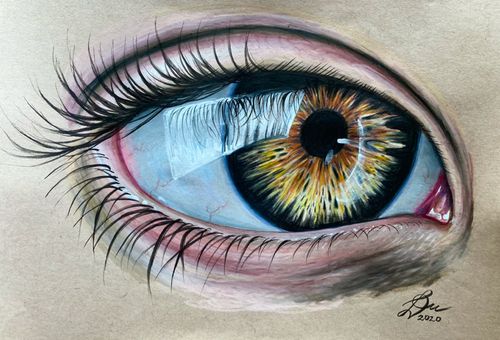
Realistic Art: Seeing the World in Detail
Realistic Art: Seeing the World in Detail
Realistic art aims to represent people, places and objects in a recognisable way. It pays close attention to the visible world: the shape of a face, the texture of fabric, the way light falls across a room or the changing colours of a landscape. Yet realism is more than simply making a picture look lifelike. It is a way of observing, interpreting and presenting the world around us.
What makes art realistic?
Realistic artists often work from direct observation, using sitters, still-life arrangements, landscapes or photographs as references. They study proportion, perspective, anatomy, colour and light to create a convincing image. Small details can help establish a sense of presence, but they are not essential: a loosely painted portrait may feel deeply realistic if its expression and posture ring true.
Realism is also distinct from strict imitation. Artists choose what to include, what to leave out and where to draw the viewer’s attention. A realistic image can reflect a particular mood, social viewpoint or personal experience, even when its subject appears ordinary.
A tradition of looking closely
The desire to depict the world convincingly has a long history. Artists in many cultures developed sophisticated ways of representing the human body, buildings and natural forms. In Europe, developments in perspective and oil painting helped painters create an increasing sense of depth and physical presence.
In the mid-19th century, the term Realism became associated with artists who turned their attention to contemporary life. Rather than focusing only on idealised figures or grand historical subjects, they depicted workers, rural communities and everyday scenes. This approach suggested that ordinary experience could be worthy of serious artistic attention.
Since then, realistic art has taken many forms. Social realism has addressed working conditions and inequality; portraiture has explored identity and character; and contemporary artists have used precise representation to examine subjects ranging from consumer culture to the natural environment.
Realism and photorealism
Photorealism is a particularly detailed form of realistic art. Emerging in the late 1960s and early 1970s, it is associated with paintings and sculptures that closely resemble photographs. Artists may use photographic references to reproduce reflections, textures and incidental details with remarkable precision.
However, not all realistic art is photorealistic. Realism can be expressive, selective or deliberately imperfect. A painter might simplify a background, exaggerate a gesture or use visible brushstrokes while still creating a believable scene. The aim is not always to fool the eye; it may instead be to make the subject feel immediate and emotionally present.
How artists create a sense of reality
Several elements work together to make an image feel convincing:
- Observation: Careful attention to the subject helps the artist understand its structure and distinctive qualities.
- Proportion and perspective: Relationships between shapes, sizes and distances give a scene a coherent sense of space.
- Light and shadow: Changes in tone describe form and help establish the atmosphere of a scene.
- Colour: Subtle shifts in hue and temperature can suggest skin, weather, materials and time of day.
- Texture: Different marks and surfaces help distinguish, for example, polished metal from rough stone.
- Expression and gesture: A slight turn of the head or movement of the hands can make a figure feel individual and alive.
These principles apply across media. Realistic art can be made with oil, acrylic, watercolour, charcoal, pencil, photography, sculpture or digital tools. The materials change, but the central challenge remains: how to translate a three-dimensional, changing world into a fixed image or object.
Why realistic art still matters
In an age of digital images, realistic art continues to hold our attention. The process of making a carefully observed work can reveal details that a quick glance might miss. A familiar face, street or object may seem different when examined closely and recreated by hand.
Realistic art can also preserve a record of people and places, inviting viewers to consider whose stories are represented and how they are shown. A portrait may communicate more than appearance; it can suggest status, vulnerability, confidence or belonging. A painting of an everyday setting can capture the character of a particular time and place.
Ultimately, realism is not simply a test of technical skill. Its power comes from the meeting of observation and interpretation. By looking closely at the world—and deciding how to represent it—artists encourage us to look again.
Exploring Realistic Art: Key Questions and Concepts Unveiled
- Why is realism important?
- What is the main idea of realism art?
- What is hyperrealism vs. realism?
- What is the 70/30 rule in art?
- What is realistic looking art called?
- What does realistic art look like?
- What type of art is realistic?
- What is realistic art?
- Why is realistic art important?
Why is realism important?
Realism is important because it helps us recognise and examine the people, places and experiences that shape everyday life. By depicting subjects in a familiar, convincing way, realistic art can preserve details, communicate emotion and draw attention to stories that might otherwise be overlooked. It also encourages careful observation, inviting viewers to look more closely at the world and consider how an artist’s choices influence what they see.
What is the main idea of realism art?
The main idea of realism art is to portray people, places and everyday life in a recognisable, truthful way, rather than idealising or romanticising them. Realist artists observe the world closely and use details such as proportion, light, colour and gesture to make their subjects feel convincing. Realism is not simply copying what is seen: artists still make choices about what to show, and their work can reflect a particular mood, viewpoint or social reality.
What is hyperrealism vs. realism?
Realism is a broad approach to art that depicts people, places and objects in a recognisable, often lifelike way. Hyperrealism takes this further, using meticulous detail, refined technique and often photographic references to create images that can appear more vivid or precise than everyday sight. The distinction is not simply about how much detail an artwork contains: realism may be expressive or selective, while hyperrealism typically emphasises extraordinary precision and clarity.
What is the 70/30 rule in art?
The 70/30 rule in art is a compositional guideline suggesting that roughly 70% of a work should be devoted to one dominant element, such as a colour, tone, shape or area of visual interest, while the remaining 30% provides contrast and variety. In realistic art, this balance can help a scene feel cohesive without appearing monotonous—for example, an artist might use mostly muted tones, with a smaller area of brighter colour to draw the viewer’s eye. It is not a strict formula, but a flexible tool that artists can adapt to suit their subject and intention.
What is realistic looking art called?
Realistic-looking art is often called representational art, meaning it depicts recognisable people, places or objects. The style may also be described as realism; when an artwork reproduces photographic detail with exceptional precision, it is often called photorealism or hyperrealism. These terms are related, but they are not interchangeable: realistic art can look convincing without copying every detail of a photograph.
What does realistic art look like?
Realistic art depicts people, objects and places in a recognisable, lifelike way. It often uses accurate proportions, perspective, colour, light and shadow to create a convincing sense of form and space. The level of detail can vary: some realistic artworks are finely rendered, while others use looser brushstrokes but still capture the subject’s appearance and character.
What type of art is realistic?
Realistic art is art that depicts people, places or objects in a recognisable, lifelike way. It is often based on careful observation and uses techniques such as accurate proportion, perspective, light, shadow and colour to create a convincing sense of form and space. Realism can be found in painting, drawing, sculpture and photography, and it ranges from loose, expressive work to highly detailed photorealism.
What is realistic art?
Realistic art is art that represents people, places or objects in a recognisable way, often using careful observation of proportion, perspective, colour, light and texture. It can range from loosely painted scenes to highly detailed, photorealistic works. Realism is not simply copying what the eye sees: artists make choices about what to emphasise, so realistic art can also express a mood, tell a story or offer a particular perspective on everyday life.
Why is realistic art important?
Realistic art is important because it helps us look closely at people, places and experiences that might otherwise be overlooked. By representing the world with care, artists can preserve a sense of time and place, explore identity and emotion, and draw attention to social issues or everyday life. Realism also develops observation and technical skill, while reminding us that even familiar subjects can be seen in new ways.